What Is a Dental Implant? How It Works, Step by Step
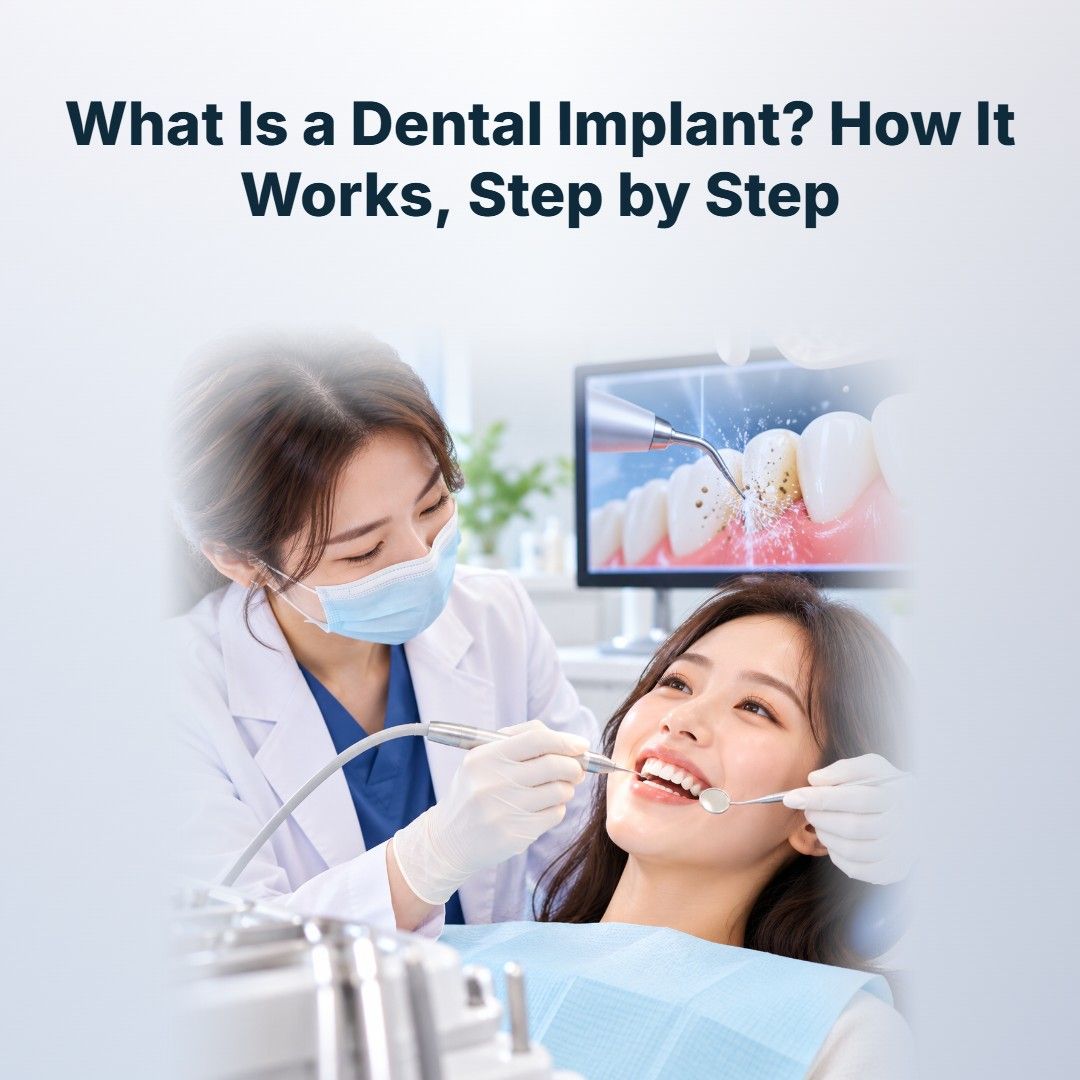
Quick answer: A dental implant is a small titanium (or zirconia) post placed in the jawbone where a tooth is missing. Over two to four months the bone bonds to the post, and a custom crown is then attached on top. The result looks, feels and chews like a natural tooth, and it does not rely on the neighbouring teeth for support.
What a dental implant is made of
An implant restoration has three parts:
| Part | What it is | Job |
|---|---|---|
| Implant (fixture) | A screw-shaped titanium post, usually 3–6 mm wide and 8–13 mm long | Replaces the tooth root and anchors in bone |
| Abutment | A small connector screwed into the implant | Links the root to the visible tooth |
| Crown | A custom tooth, usually zirconia or ceramic | Restores appearance and chewing |
Titanium is used because bone grows directly onto its surface, a process called osseointegration. This is what makes an implant stable enough to chew on like a natural tooth.
How dental implant treatment works, step by step
- Consultation and 3D scan. The dentist examines your mouth, reviews your medical history and takes a 3D CBCT scan. The scan shows bone height, width and the position of nerves and sinuses.
- Treatment planning. The implant's size, angle and depth are planned digitally. In guided surgery, a custom surgical guide is printed so the plan can be transferred precisely.
- Bone grafting, if needed. If the bone is too thin or low, graft material is added first or at the same time as the implant.
- Implant placement. Under local anesthesia, the implant is placed in the bone. A single implant usually takes 30–60 minutes.
- Healing (osseointegration). The bone fuses with the implant over roughly 2–4 months in the lower jaw and 3–6 months in the upper jaw. A temporary tooth can often be worn during this time.
- Abutment and impression. Once the implant is stable, the abutment is attached and a digital scan or impression is taken for the crown.
- Final crown. The crown is fitted, the bite is checked and adjusted, and regular check-ups begin.
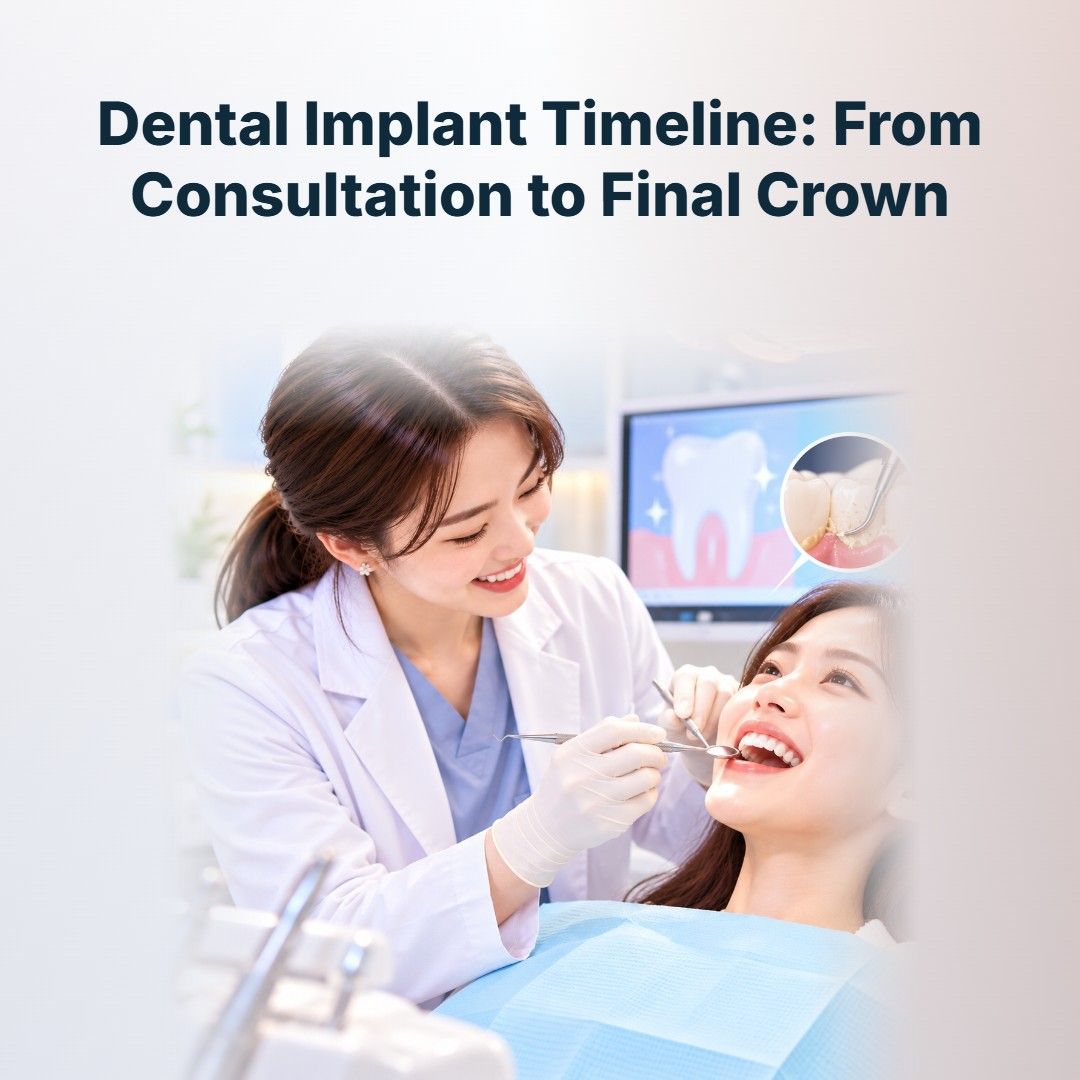
How long does the whole process take?
For most patients, the full process takes 3 to 6 months from consultation to final crown. It can be shorter when an immediate (same-day) temporary tooth is possible, and longer when bone grafting or a sinus lift is needed first.
Who is a good candidate?
Most healthy adults who have lost a tooth can have an implant. Good candidates usually have:
- Enough jawbone, or are suitable for a bone graft
- Healthy gums, or gum disease that has been treated
- Controlled diabetes or blood pressure, if they have these conditions
- A willingness to keep up daily cleaning and check-ups
Heavy smoking, uncontrolled diabetes and some medications (such as certain osteoporosis drugs) raise the risk of complications. These do not always rule implants out, but they should be discussed with your dentist before planning.
Benefits of dental implants
- Natural look and bite — a well-made crown is hard to tell apart from a natural tooth.
- Protects neighbouring teeth — unlike a bridge, healthy teeth do not need to be ground down.
- Helps preserve bone — the implant transfers chewing forces into the jaw, which slows the bone loss that follows tooth loss.
- Stable — no slipping or clicking as with removable dentures.
- Long-lasting — with good care, the implant itself can last for decades; the crown may need replacing after 10–15 years.
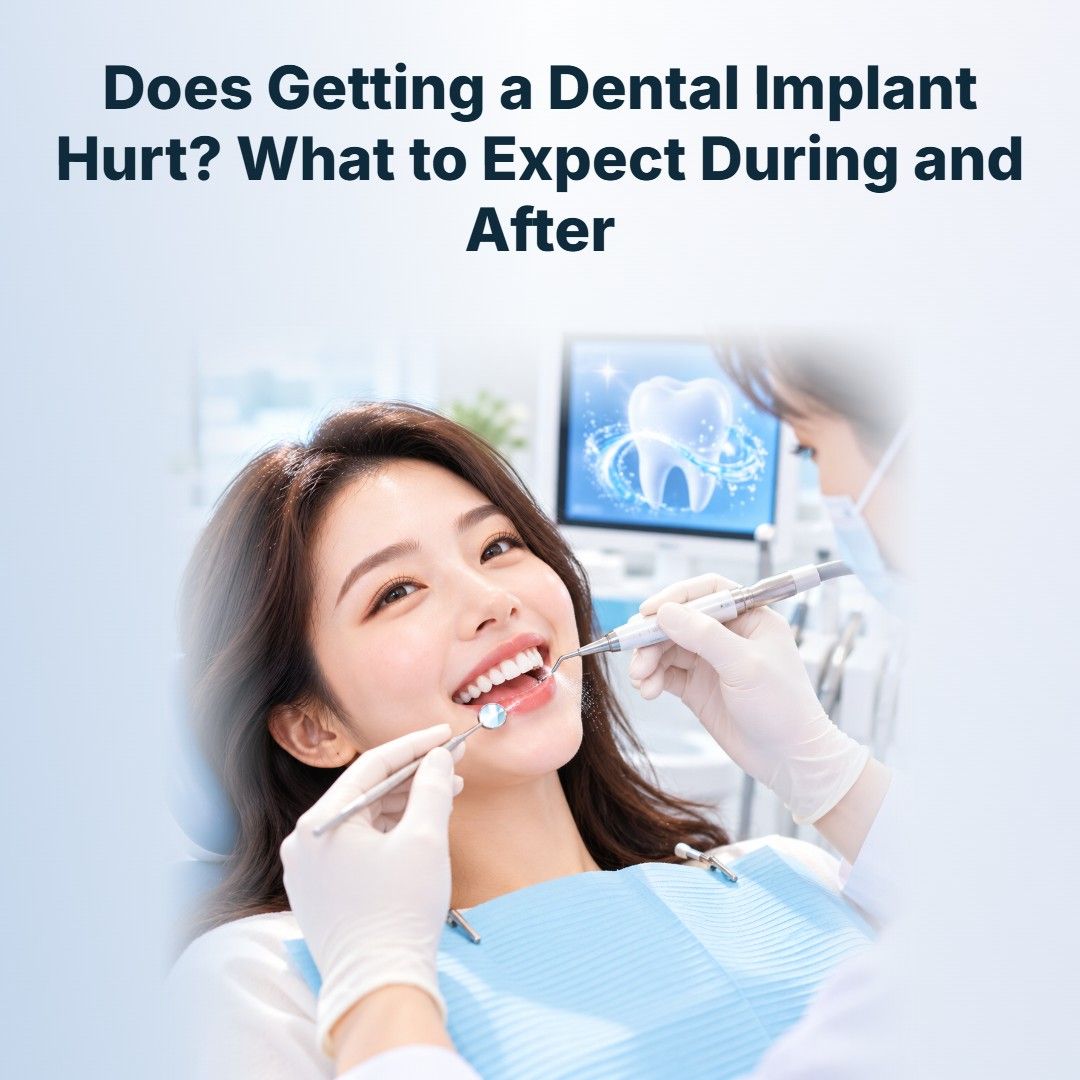
Does getting an implant hurt?
The surgery is done under local anesthesia, so most people feel pressure rather than pain. Mild soreness and swelling for 2–4 days is common and is usually managed with standard pain relievers. Computer-controlled anesthesia and topical numbing can make the injection itself much more comfortable.
Aftercare in the first week
- Eat soft, lukewarm food and chew on the other side.
- Avoid smoking and alcohol while the site heals.
- Brush gently around the area and use any rinse your dentist prescribes.
- Keep your follow-up appointments.
Frequently asked questions
Is a dental implant better than a bridge?
For a single missing tooth, an implant is often preferred because it does not involve the neighbouring teeth and helps keep the bone. A bridge can be faster and may suit people who cannot have surgery.
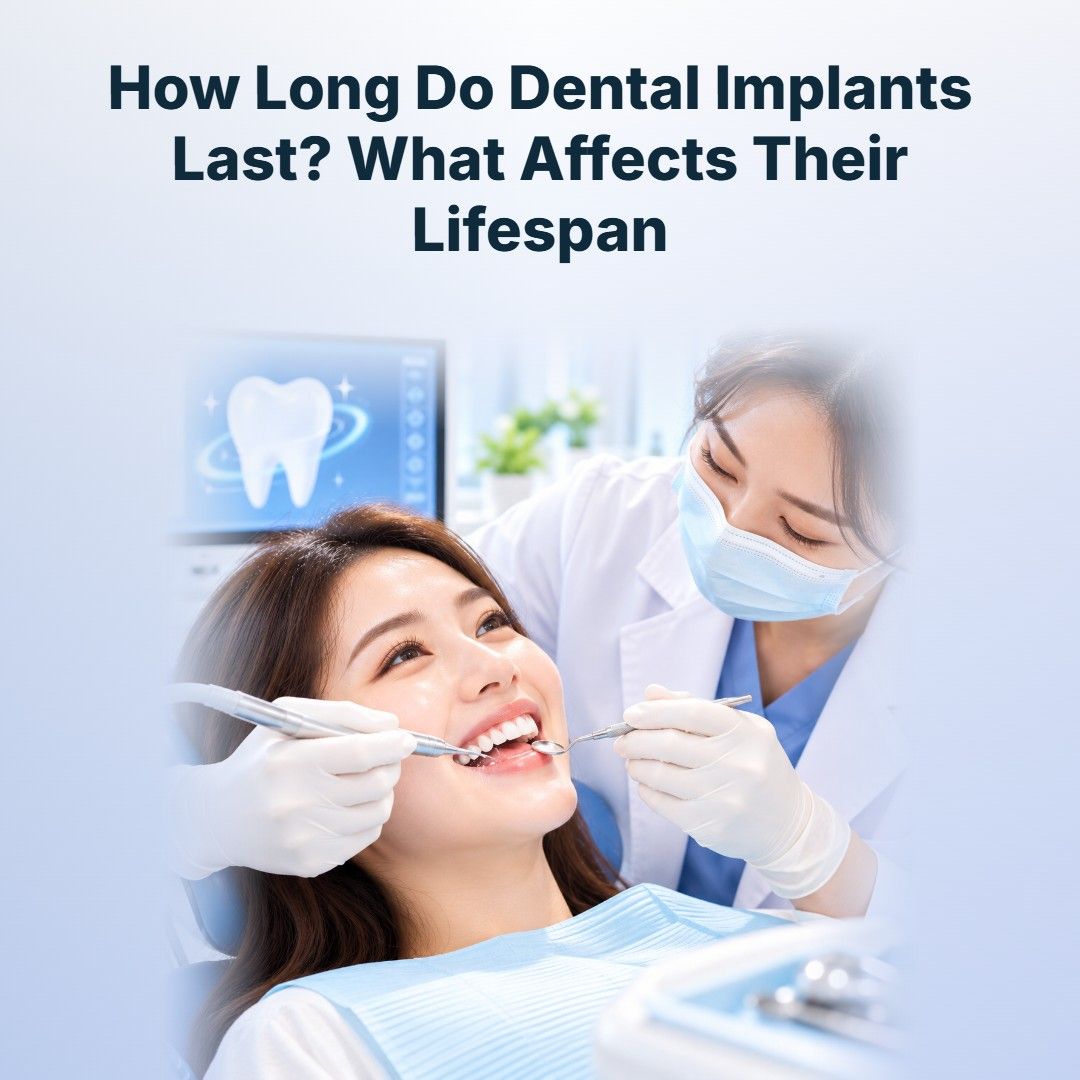
How long do dental implants last?
Long-term studies report survival rates above 90% after 10 years. Daily cleaning, regular check-ups and not smoking make the biggest difference.
Can I get an implant right after an extraction?
Sometimes. If the bone and gum are healthy, an implant can be placed on the same day as the extraction. Otherwise, the site is allowed to heal for a few weeks or months first.
Am I too old for dental implants?
There is no upper age limit. Overall health and bone condition matter more than age.
This article is for general information and does not replace a personal examination. Treatment times and results vary from person to person.